You landed the interview. That is a major milestone, but the real work starts now. What happens between this moment and the second you walk through the door (or log into the call) is what separates candidates who receive the offer from those who receive polite rejection emails.
Think about it this way: two candidates can possess nearly identical resumes, similar technical depth, and equivalent qualifications. The candidate who prepared with intention is the one who leaves with the job offer. Thorough preparation is not just a nice-to-have; it is the ultimate competitive advantage that most professionals drastically underestimate.
Before the Interview: Setting the Foundation
The interview starts days before you show up. The candidates who make an unforgettable impression are not just skilled; they have done their groundwork.
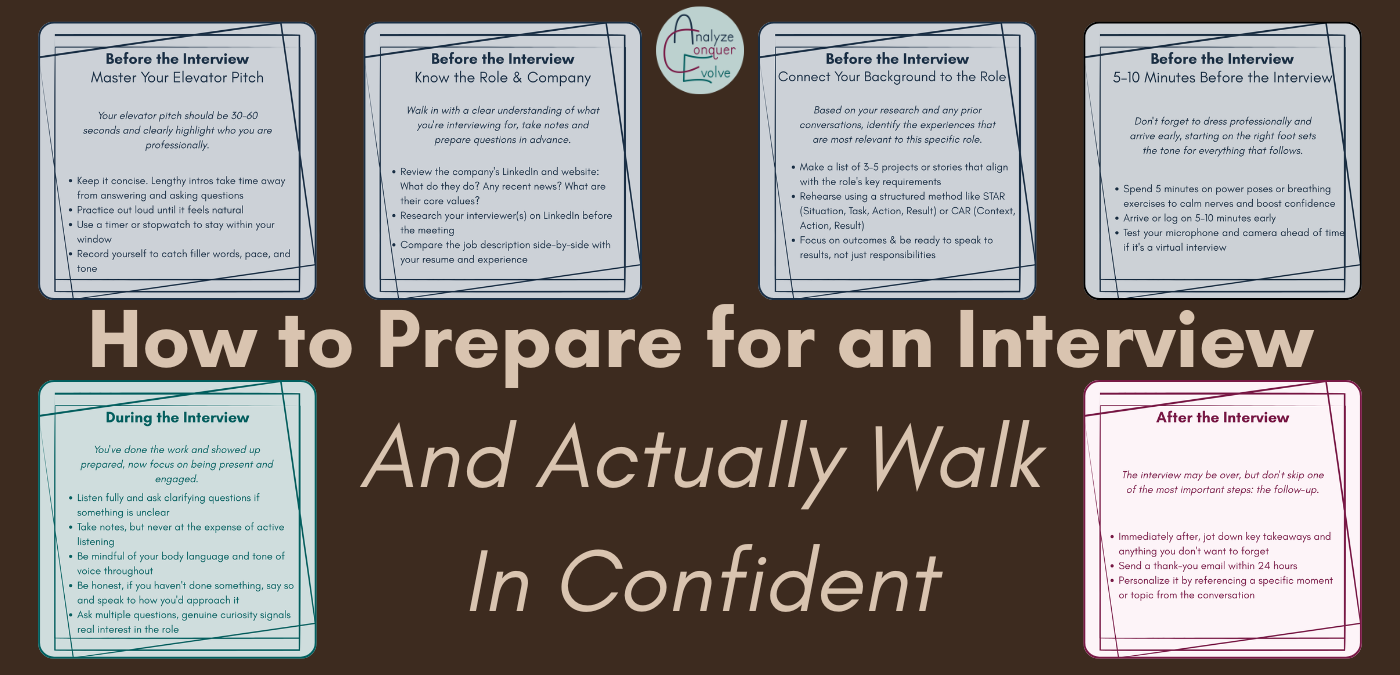
1. Master Your Elevator Pitch
First impressions happen in seconds. Within the first two minutes of an interview, you will almost certainly hear some version of: "So, tell me about yourself." It sounds like casual conversation, but it is one of the most critical inflection points of the entire meeting.
Your elevator pitch should run between 30 and 60 seconds and deliver a sharp, professional highlight reel. It should not be a chronological recitation of every role on your resume. Instead, focus on a confident snapshot that covers three core elements:
- Who you are professionally: Your specialty, discipline, and current seniority level.
- What you do exceptionally well: The specific problems you solve and what you are known for across engineering or data teams.
- Why you are here: What drew you to this exact role, technical stack, or company mission.
After more than 12 years of conducting interviews on the hiring side of the table, I can almost always predict how an interview will unfold based solely on those opening 60 seconds.
Candidates who start with a rambling, unfocused introduction tend to give rambling answers throughout. Even when prompted to tighten things up, that pattern is hard to break, and it often results in running out of time before reaching technical depth. On the flip side, candidates with an underdeveloped, two-sentence intro often struggle to provide sufficient detail, leaving the panel without enough proof to advocate for them.
The sweet spot is intentional self-awareness. Some of the most impressive candidates I have ever hired were people who caught themselves going slightly off track mid-answer, paused, recalibrated, and recovered cleanly. That poise signals executive maturity.
2. Know the Role and Company Cold
Showing up without doing your homework is the easiest way to lose an opportunity you were fully qualified to do. Interviewers notice immediately when a candidate does not understand their business model or cannot articulate why they chose this specific company.
Start with the company website and public channels. What products or services do they sell? Who is their customer? Read recent company announcements, press releases, product updates, or leadership changes. These make fantastic natural conversation starters.
Next, look up your interviewers on LinkedIn. How long have they been at the organization? What did they do prior? You do not need to memorize their biography, but understanding their discipline helps you tailor your technical depth to their vantage point.
Finally, read the job description with a highlighter. Pinpoint where your past projects map directly to their requirements, identify potential experience gaps, and prepare honest, proactive explanations for how you plan to ramp up in those areas.
3. Connect Your Background to Their Specific Needs
Knowing your past work is easy. Translating that work into a compelling answer for the team in front of you is a completely different skill.
Curate a core portfolio of 3 to 5 versatile stories before the interview. These stories should highlight core competencies: technical problem-solving, stakeholder collaboration, handling production incidents, driving measurable results, or leading through organizational change.
Use structured storytelling frameworks like STAR (Situation, Task, Action, Result) or CAR (Context, Action, Result). These frameworks act as guardrails to prevent rambling and keep your answers anchored to quantifiable business outcomes.
5 to 10 Minutes Before the Interview
These final minutes are not for last-minute cramming. If you prepared well, trust the process. Your priority right now is getting your mind and body into a calm, focused, and grounded state.
- Posture and Breathing: Practice open, upright posture to reduce physical tension. Take slow box breaths (inhale for 4 seconds, hold for 4, exhale for 4).
- Environment Check: If the interview is virtual, complete a tech run-through 30 minutes in advance. Test your camera, verify your microphone input, check your lighting, and close every browser tab or messaging client that could pop up with a distracting notification.
During the Interview: Execution and Presence
Many candidates approach interviews like an oral exam where they must recite flawless answers. The best interviews, however, feel like collaborative business discussions between two professionals exploring mutual fit.
- Active Listening: Do not just wait for your turn to speak. Absorb what the interviewer is actually asking. If a prompt feels ambiguous, ask a clarifying question before answering. Answering the wrong question confidently is far worse than taking 5 seconds to confirm the scope.
- Tone and Body Language: Maintain steady eye contact (look into your webcam during virtual calls), keep an open posture, and speak with steady energy. If the interviewer looks rushed, tighten your delivery. If they lean in and ask follow-ups, dive into the architectural details.
- Take Strategic Notes: Write down key names, technical requirements, or metrics mentioned by the panel. Keep your notes brief so you never lose conversational flow.
- Ask Insightful Questions: Avoid generic questions like "What does a typical day look like?" Ask about current architectural bottlenecks, how the team measures success over the first 90 days, or what friction exists between engineering and business stakeholders.
After the Interview: The 24-Hour Follow-Up
The conversation is over, but the impression you leave is not finalized. What you do in the hours immediately following the interview keeps you top of mind when panels debate between two final contenders.
- Immediate Debrief: Spend 10 minutes right after the call capturing notes while the discussion is fresh. What questions caught you off guard? What topics resonated most with the hiring manager?
- The Personalized Thank-You Email: Send a tailored thank-you note within 24 hours to everyone you met. Avoid generic templates. Reference a specific architectural debate, a shared operational goal, or an interesting challenge discussed during the meeting.
Keep your note to three brief paragraphs: express appreciation for their time, highlight one specific topic that reinforced your excitement for the work, and reiterate why your background aligns with their upcoming goals.
You Don't Have to Prepare in a Vacuum
Interview preparation is not about memorizing scripted answers. It is about building the muscle memory and poise to articulate your accomplishments under pressure.
If you want a structured blueprint, grab the free Interview Prep Guide on our Resources page for a quick, 1-page roadmap covering everything in this article.