When looking for a job, your Resume and LinkedIn can be powerful tools to help you land the perfect role. You see a lot of advice about how to optimize your resume for applicant tracking systems (ATS), but what many professionals miss is how their LinkedIn profile relates directly to their resume.
Your LinkedIn profile is not just an online resume; it is a powerful branding and marketing platform. You do not need to post daily for it to work for you. Think of it as a mechanism to expand your reach, grow your network, and generate inbound momentum in your search.
Your LinkedIn Profile is Not an Online Resume: It is Your Technical Portfolio
The most common mistake I see technical experts make is treating LinkedIn like a mere repository of their work history. If a recruiter or hiring manager finds your resume compelling, their immediate next step is to search for you on LinkedIn.
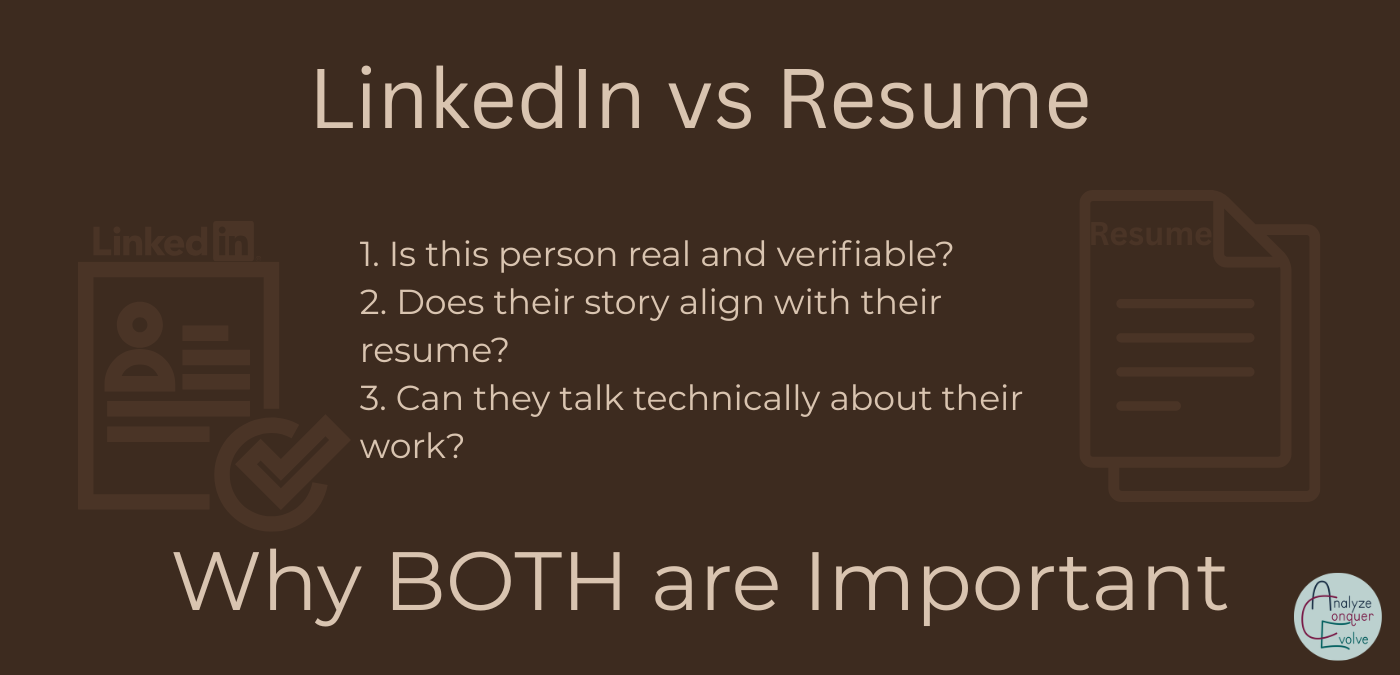
They are not looking for a carbon copy of the document they just read. They are looking for technical depth, project scope, and verifiable proof of your work. They want clear answers to three key questions:
- Is this person real and verifiable?
- Does their public career story align with what their resume claims?
- Can they talk technically and intelligently about their work?
You do not need to create viral posts to see results. You just need a solid, strategic foundation: how you present your background in your profile, the technical insights you share, and how you engage thoughtfully in conversations across your industry.
5 Tips to Make Your LinkedIn Profile Stand Out
1. The Power of a Professional Photo
In an era flooded with duplicate profiles and generic applicants, a high-quality, authentic photo is more important than ever. Your photo instantly builds credibility. It signals to the viewer that you take your professional reputation seriously.
Tip: Keep your photo current, clean, and professional, and ensure you look approachable.
2. Crafting a Compelling "About" Section
This section is where you transition from a list of past tasks to a clear professional pitch. Use the "About" section to tell your story: what technical problems you solve, what architecture patterns you master, and what business impact you deliver.
- The Hook is Critical: Make sure the first 2 to 3 lines contain your core specializations (e.g., "Engineering leader specializing in distributed data pipelines, cloud migration, and team scaling"). Visitors must click "...see more" to view the rest. Your opening lines must earn that click.
- Use Visual Anchors: Do not hesitate to use clean symbols or bullets to make key programming languages, cloud tools, or methodologies stand out and break up long blocks of text.
3. Consistency is Key: Matching Your Work History
Your work history on LinkedIn should match what is listed on your resume regarding job titles, dates of employment, and company names. Any unaddressed discrepancy can raise an avoidable flag during initial screening.
However, your LinkedIn profile gives you a major advantage: space. Unlike a standard two-page resume, your LinkedIn history allows you to provide broader context, explain project nuances, and link directly to public projects or code repositories while keeping your highest-impact accomplishments at the top.
4. Optimize for Keywords and Recruiter Searchability
Your skills list and technical keywords determine whether your profile appears in recruiter searches. If an internal recruiter searches for a "Senior Data Engineer using Snowflake and dbt", those terms need to exist across your Headline, About section, Work History, and Skills list.
- Keywords bring recruiters to your profile; structured content keeps them engaged. Ensure your skills list reflects modern, specific technologies (such as Terraform, Docker, SQL, or Kubernetes) rather than generic labels like "Programming."
- Associate specific skills with individual roles in your work history. This helps hiring panels understand exactly when and where you applied each tool in production.
5. Your Headline is Your Virtual Pitch
Your headline is the single most visible piece of text across the platform. Do not settle for just your generic internal job title. Instead, showcase your specialization and value proposition:
✅ Strong: Senior Backend Developer | Go, Kubernetes, and Distributed Systems | Architecting High-Performance Microservices
✅ Strong: Principal Data Analyst | Financial Modeling, Python (Pandas), & Executive Dashboard Automation
Keep Your Resume Consistent with Your LinkedIn Profile
I recommend using LinkedIn as your comprehensive repository of verified wins and projects, ready to adapt into targeted resume versions for specific applications. Aligning your bullet points ensures your resume remains sharp, contextual, and authentic without sounding like a generic AI draft.
Keep a master document of your achievements organized using the same structure as your resume. That way, you can easily pull relevant bullet points for applications without having to reformat each time.
Consider this your reminder: take twenty minutes today to review your LinkedIn profile, audit your keywords, and align your headline with the exact roles you want next.